

For freelancers, designers, artists, photographers and other independent professionals, a strong online presence is essential. Potential clients often decide within seconds whether they want to learn more about someone’s work. A portfolio website therefore has to do more than simply display a few projects. It needs to communicate personality, demonstrate expertise and make the next step as easy as possible.
At the same time, many creators also use tools such as Linktree to collect their most important links in one place. These services are practical, especially for social media profiles, but they offer very little room for individual branding. Most link pages consist of the same basic structure: a profile image, a short introduction and a vertical list of buttons.
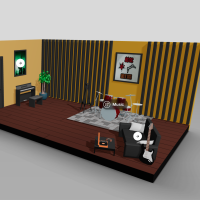
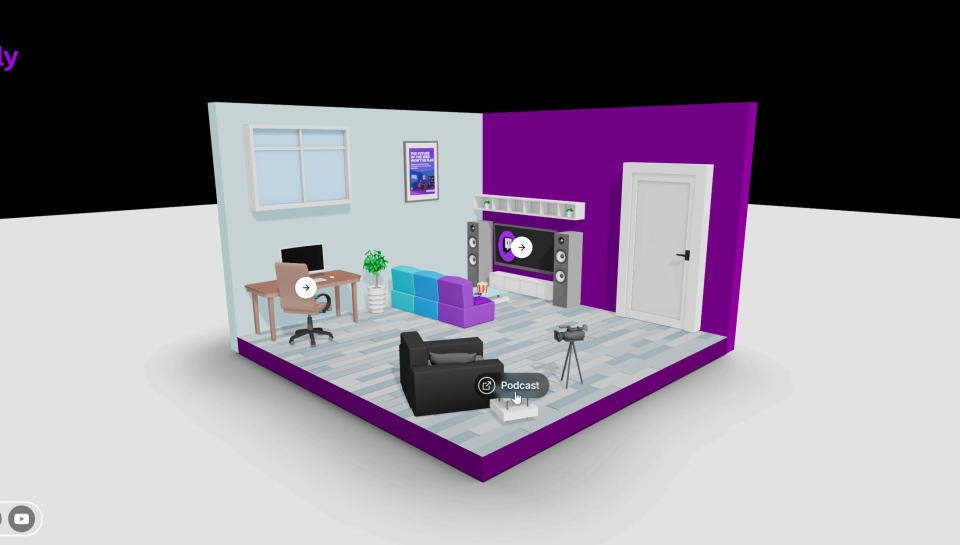
Voxxly offers a different approach. Instead of presenting projects, contact details and social profiles on another conventional page, users can organize them inside a small, interactive low-poly 3D room. The result can function as a complete portfolio website, a personal landing page or a visually distinctive 3D Linktree alternative.
Why traditional portfolio websites often look interchangeable
Modern website builders have made it easier than ever to create a professional portfolio. However, simplicity often comes with a downside. Many users choose from the same templates, place their content inside the same sections and end up with websites that look remarkably similar.
A typical portfolio page includes a large headline, a short introduction, several project cards, testimonials and a contact form. There is nothing inherently wrong with this structure. It is familiar, functional and easy to understand. The challenge is that it rarely creates a strong sense of identity.
This is particularly relevant for people who sell creative or digital services. A graphic designer, web developer, photographer or branding specialist needs to demonstrate more than competence. The presentation itself should ideally reflect the quality and originality of the work.
A three-dimensional portfolio provides an additional layer of expression. The choice of room, furniture, objects, textures and colors becomes part of the personal brand. Instead of selecting a template and replacing placeholder content, users can create an environment that feels intentionally designed for them.
How Voxxly can work as a 3D portfolio website
A Voxxly website begins with a small low-poly room. Users can configure the basic scene, adjust the room size, change wall and floor colors, select textures and arrange objects freely with drag and drop.
The room is not merely a visual background. Individual objects can be connected to real website content.
For example, a freelance designer could use:
- A framed image to open a case study
- A laptop to display recent website projects
- A bookshelf to present services or areas of expertise
- A business card to show contact information
- A screen to play a showreel or presentation video
- A social media object to link to LinkedIn, Instagram or Behance
When a visitor selects one of these objects, the associated content can open in a panel on the left, on the right or as a full-page view. This gives creators the freedom to combine an interactive visual environment with familiar content formats such as headings, paragraphs, images, videos and links.
The 3D room attracts attention, while the connected content pages provide the information visitors need to evaluate the work and make contact.
Voxxly as an alternative to Linktree
Link-in-bio tools solve a simple problem: social media profiles usually provide space for only one external link. A Linktree-style page allows users to collect multiple destinations behind that single URL.
For many people, that is enough. However, a standard link page rarely contributes much to brand perception. The visitor sees a list of buttons, selects a destination and leaves again.
Voxxly can serve the same practical purpose while offering a more distinctive presentation. Important links do not need to appear as identical buttons. They can be assigned to objects that make sense within the room.
A musician might connect an instrument to a streaming profile, a poster to upcoming events and a record player to the latest release. A photographer could use framed pictures for galleries, a camera for booking information and a desk for contact details. A consultant might connect different objects to services, articles, LinkedIn and appointment scheduling.
The basic function remains simple: one central URL provides access to all relevant content. The difference is that the links form part of a coherent visual concept instead of appearing as an isolated list.
A stronger digital identity for freelancers and creators
Freelancers often compete in markets where many providers offer similar services. Qualifications and pricing matter, but the way someone presents themselves can strongly influence whether a potential client remembers them.
A customized 3D portfolio can help communicate personality before a conversation even begins. A minimalist office may convey precision and professionalism. A colorful studio can suggest creativity and experimentation. A calm, carefully designed room may suit a wellness professional, while a futuristic environment could work well for a developer or technology consultant.
Because the space itself is editable, creators are not restricted to a predefined visual identity. They can combine their own logos, images and videos with Voxxly’s low-poly assets. Custom 3D models can also be incorporated, allowing users to include objects that are directly connected to their work or brand.
This makes the website more than a container for information. The environment becomes part of the message.
Combining visual impact with real website functionality
An unusual design is only useful when the website still fulfills its practical purpose. Visitors need to understand who the creator is, what they offer and how to contact them.
Voxxly therefore combines the 3D scene with conventional website functionality. Users can create content pages, add text and headings, upload images and videos, include external links and connect social media profiles. Contact forms and subpages can provide additional structure where necessary.
A Voxxly portfolio can therefore include the same essential information as a traditional website:
- An introduction or professional biography
- Services and pricing information
- Project descriptions and case studies
- Client references
- Images and videos
- Social media profiles
- Contact options
The difference lies in how visitors discover that information. Instead of moving through a fixed sequence of vertically stacked sections, they can select relevant objects and explore the content in a more visual way.
Can a 3D portfolio website be SEO-friendly?
Search engine visibility is an important concern for anyone building a professional website. Many 3D experiences on the web are visually impressive but contain very little indexable content. They may consist almost entirely of a rendered scene, with limited text, weak metadata and no clear page structure.
Voxxly is designed to avoid that problem. The 3D room is combined with actual content pages that can contain relevant headings, written information, images, videos and links. Users can also add page titles, meta descriptions and other SEO-relevant information.
This gives search engines meaningful content to understand and index. A freelance designer could, for example, create separate pages for web design, branding and user interface projects. A photographer could publish optimized pages for portrait photography, commercial shoots and event photography. The 3D room provides the visual experience, while the structured content supports discoverability.
Fast loading times are equally important. Voxxly uses lightweight low-poly assets and optimized 3D models to reduce unnecessary file size. Baked lighting allows scenes to retain visual depth without requiring the browser to calculate every lighting effect in real time.
This balance matters because a portfolio should not sacrifice usability for appearance. Visitors should be able to access the website quickly and navigate it smoothly on both desktop and mobile devices.
When is a Voxxly portfolio particularly useful?
A conventional portfolio remains the right choice for many projects. Some users need a highly structured website with large amounts of text, complex databases or extensive e-commerce functionality.
Voxxly is especially relevant when visual differentiation and personal presentation play a central role. Suitable use cases include:
Creative freelancers
Designers, illustrators, photographers, video creators and artists can use the room itself to demonstrate their visual approach. Their portfolio does not merely describe creativity; it expresses it.
Web designers and developers
A 3D portfolio can demonstrate technical curiosity and help a service provider stand out from competitors using similar templates. Individual objects can link to case studies, code repositories and live projects.
Personal brands and consultants
Coaches, speakers, consultants and content creators can collect their services, social profiles, publications and contact options in one branded environment.
Small agencies and studios
A creative agency can use a Voxxly space as a digital reception area, project showroom or compact agency website. Different parts of the room can introduce the team, services and selected work.
Artists and musicians
Visual work, music, videos, external platforms and event information can be combined in a central interactive presentation rather than being distributed across disconnected profiles.
Portfolio website or 3D Linktree?
The answer depends on how much content the user wants to present.
A small Voxxly space with links to social profiles, projects and contact details can function as a visually enhanced Linktree alternative. It provides a single memorable URL that can be placed in an Instagram, TikTok, LinkedIn or YouTube profile.
With additional content pages, case studies, media and contact forms, the same space can become a complete portfolio website. Users do not necessarily have to choose between the two concepts. They can begin with a compact link hub and expand it over time into a more detailed professional presence.
This flexibility is particularly useful for freelancers at the beginning of their careers. They can launch a small site quickly and add new projects or services as their portfolio grows.
A portfolio should do more than store links
The main purpose of a portfolio is not simply to archive work. It should help the right people understand the creator’s value and remember them after leaving the website.
Traditional portfolio builders and link-in-bio tools offer speed and convenience, but they often provide limited differentiation. Voxxly introduces another option: a small low-poly 3D space that combines visual identity, interactive discovery and conventional website content.
For freelancers, designers, artists and creators, this can turn a simple collection of projects and links into a coherent digital presence.
Voxxly is not about replacing every traditional portfolio. It is about giving people a more expressive way to present their work when another flat template is no longer enough.